
Core Principle: Clarify the core of the layout and balance multiple needs
The core of indoor playground design andis to balance fun, safety and space utilization. A scientific and reasonable layout can not only improve the playing experience, but also maximize the value of the indoor play space. Especially for commercial indoor playground, the layout design directly affects the passenger flow and operational benefits. To create an indoor playground that children love and parents trust, it is necessary to follow a clear step-by-step process, combine the characteristics of indoor playground equipment and spatial rules, and gradually implement the perfect layout. Among them, indoor playground design is the core guide of the layout, and indoor play space is the carrier of the layout, which complement each other.


Step 1: Preliminary Research and Positioning to Lay a Solid Foundation for Design.
Before starting the planning, it is necessary to clarify the core positioning of the venue — whether it is a parent-child park for young children, a comprehensive designing play spaces covering all age groups, or a commercial indoor playground focusing on trendy experiences. At the same time, accurately measure the basic parameters such as the venue area, floor height and load-bearing, sort out the rigid requirements such as lighting, ventilation and fire exits of the venue, which is the premise for all subsequent Indoor playground design and equipment placement. In addition, investigate the layout highlights and deficiencies of similar venues around, combine the playing needs of the target audience, clarify the core functions of the indoor play space, and avoid space waste or poor experience caused by blind design.


Step 2: Functional Zone Planning to Optimize Space Flow.
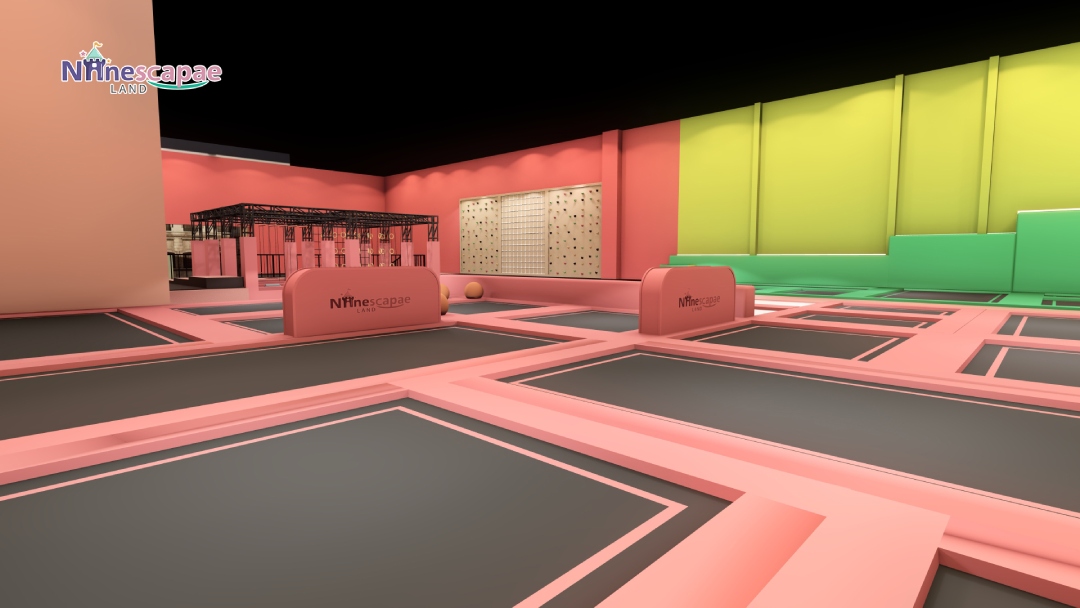
The key to indoor playground design and is “clear zoning and smooth flow”, while the utilization rate of indoor play space is the core goal of the layout. At the same time, Indoor playground design also needs to be adjusted according to the actual situation of the space. A reasonable functional zoning can avoid playing conflicts between children of different ages, and at the same time improve the utilization rate of the Indoor play space. It is recommended to divide four core areas: core play area, exclusive area for young children, creative interaction area and supporting service area. The core play area can place large-scale comprehensive indoor playground equipment, such as a complex of combined slides, climbing nets and ball pools, as the “traffic leader” of the venue; the exclusive area for young children should adopt soft-pack materials, equipped with gentle equipment such as mini climbing and sliding combinations and soft building blocks, separated from the older children’s activity area to ensure the safety of young children; the creative interaction area can set up role-playing houses, handcraft areas, etc., to enrich the playing experience; the supporting service area includes parent rest area, storage area and water bar, taking into account the parents’ care needs and potential secondary consumption. The flow line design adopts a circular layout, with the main channel width not less than 1.8 meters, avoiding dead ends and congestion, allowing tourists to flow naturally.


Step 3: Selection and Placement of Equipment to Meet Design Requirements.
The selection and placement of indoor playground equipment should meet the needs of indoor playground design and indoor play space. Among them, indoor playground design determines the selection direction of equipment, and indoor play space determines the placement specifications of equipment. The selection of indoor playground equipment should take into account safety, fun and space adaptability.commercial indoor playground can give priority to modular and multi-functional equipment, which can not only flexibly adjust the layout, but also reduce space occupation. The core play area can be equipped with a 2-3 layer climbing comprehensive equipment, connected with a large ball pool below, and matched with various types such as straight slides and spiral slides to improve the diversity of play; the trampoline area can combine ordinary trampolines and basketball shooting trampolines, add interactive games such as sticky wall to adapt to older children; the exclusive area for young children should choose soft equipment with no sharp edges and moderate height to ensure playing safety. When placing, pay attention to the equipment spacing, reserve sufficient activity and emergency space, disperse the layout of popular equipment to reduce queuing congestion, and use vertical space to design multi-layer play structures to further improve the utilization rate of the indoor play space.


Step 4: Optimization of Safety Details to Improve the Design Scheme.
Safety protection and detail optimization can improve indoor playground design and indoor play space. Safety is the primary principle of indoor playground design and the core concern of parents. At the same time, safety protection can further improve the experience of indoor play space, and indoor playground design needs to integrate the concept of safety into every detail. All indoor playground equipment must meet national safety standards, with smooth surfaces without burrs, soft-pack treatment on corners, and non-slip, good buffer performance cushions laid on the ground. Especially in high-frequency activity areas such as trampoline areas and under slides, the thickness of the buffer cushion should not be less than 8cm. At the same time, improve fire-fighting facilities, ensure unobstructed fire exits, equip with eye-catching safety signs, the height of the signs is suitable for children’s sight, and set up luminous prompts at emergency exits. In terms of details, the walls of the indoor play space adopt light colors, matched with mirrors or transparent materials to extend the visual space and reduce a sense of oppression; the ventilation system is kept unobstructed to avoid odor accumulation; the lighting uses soft and non-glare warm light to protect children’s eyesight, making the entire play space safe and comfortable.
Step 5: Trial Operation Debugging to Finalize the Final Layout.
After the layout and equipment placement are completed, trial operation debugging is required to observe the passenger flow and equipment utilization rate in different areas, and collect feedback from parents and children. Focus on checking the operational stability of indoor playground equipment, investigate problems such as traffic congestion and unreasonable equipment spacing, and adjust the zoning layout and equipment position of the Indoor Play Space. For commercial indoor playground, the layout can be optimized through data analysis, and the indoor playground equipment with high utilization rate can be placed in the core area to improve the passenger flow conversion rate; for equipment or layout with poor feedback, adjust and replace in a timely manner to ensure that the final indoor playground design not only meets safety standards, but also meets the playing needs of the target audience, creating a perfect indoor play space with both fun and practicality.
In summary, the perfect layout of an indoor playground is not a simple pile of equipment, but to maximize the value of the indoor play space through scientific preliminary positioning, reasonable zoning planning, suitable equipment selection, careful safety protection and continuous optimization and adjustment. As a professional Ninescapeland playground equipment manufacturer, we are deeply engaged in the R&D, production and supporting services of indoor playground equipment, and can provide modular, safe and compliant equipment support according to various and indoor playground design needs, adapting to various scenarios such as parent-child parks and commercial indoor playground. Among them, indoor playground design is the core of the layout, and indoor play space is the carrier of the layout. Only the combination of the two can create a high-quality venue. Whether it is a parent-child park or a commercial indoor playground, as long as you follow the above step-by-step guide, match high-quality playground equipment, and take into account the safety, fun and operational needs of indoor playground design, you can create an indoor playground that children linger on and parents can trust, allowing every inch of the indoor play space to exert its due value.
Leave a Reply